Buy online
Freshly packed, delivered in 3 to 5 days


Free delivery on orders ₹399+ · Cash on Delivery available
Why Almonds (Badam) Are Called the King of Dry Fruits
Almonds, known as Badam in Hindi, have been a staple in Indian households for centuries. Whether it's your grandmother insisting on soaked almonds every morning or modern nutritionists recommending them for weight loss - almonds truly deserve their superfood status.
At Chau Foods, we source premium California almonds and Iranian Mamra almonds directly from the finest farms, ensuring you get the freshest, most nutrient-dense badam available online in India.
How Many Almonds Per Day?
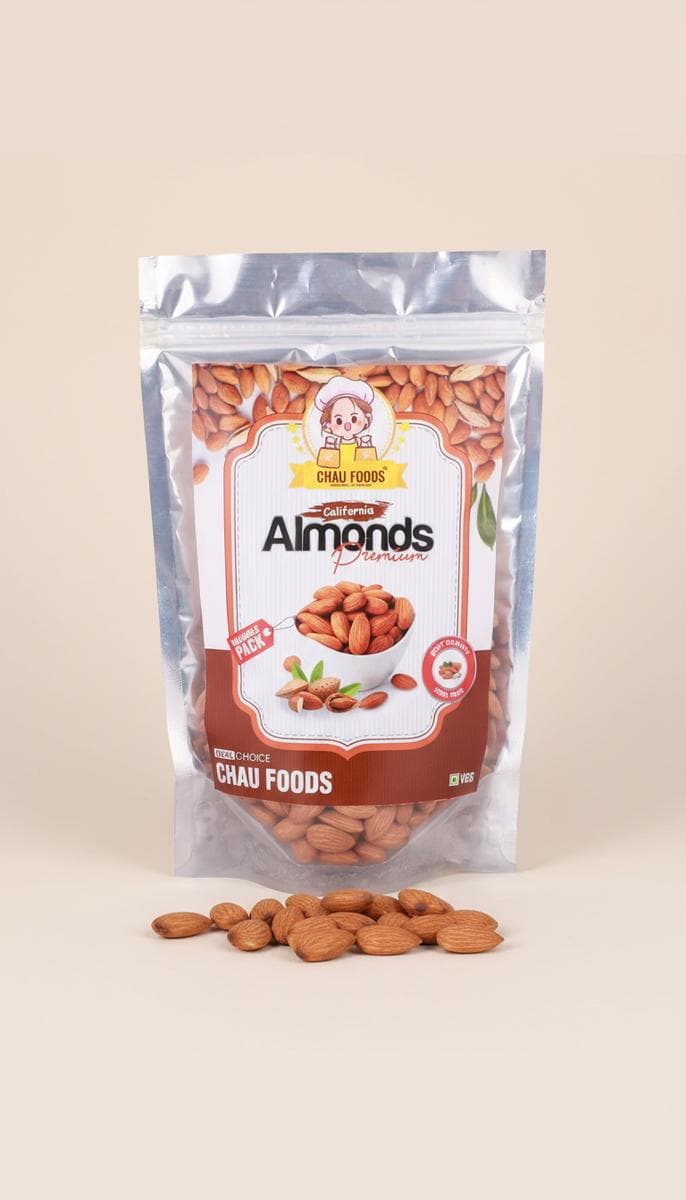
Featured Product
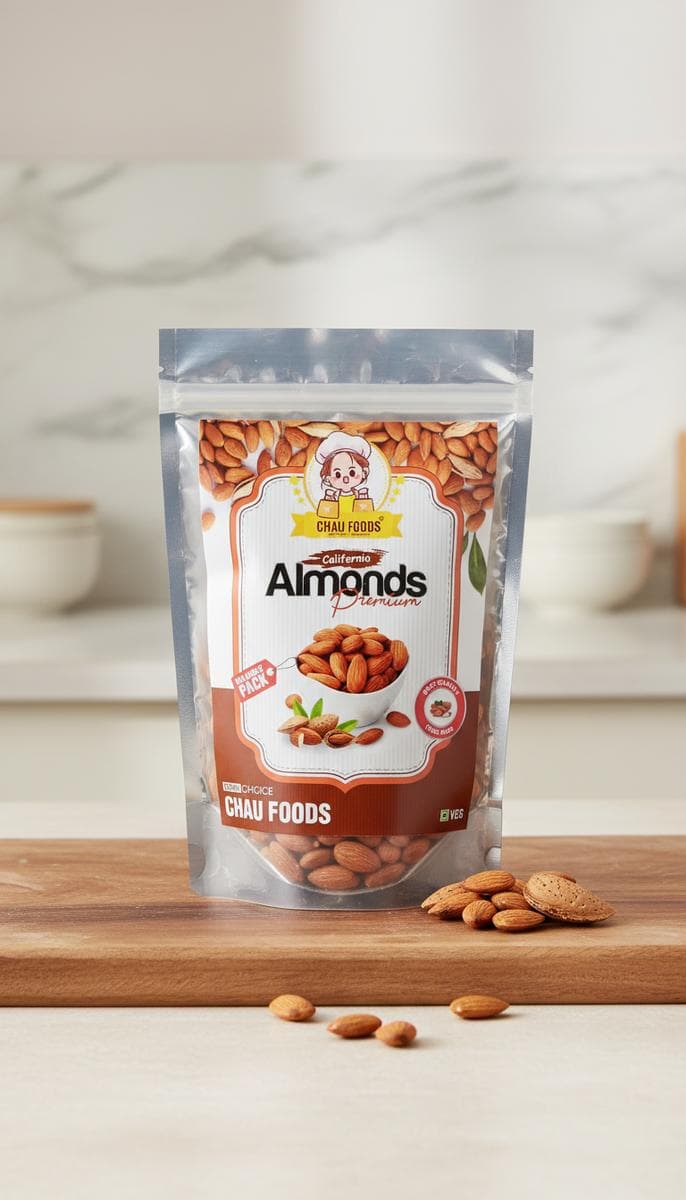
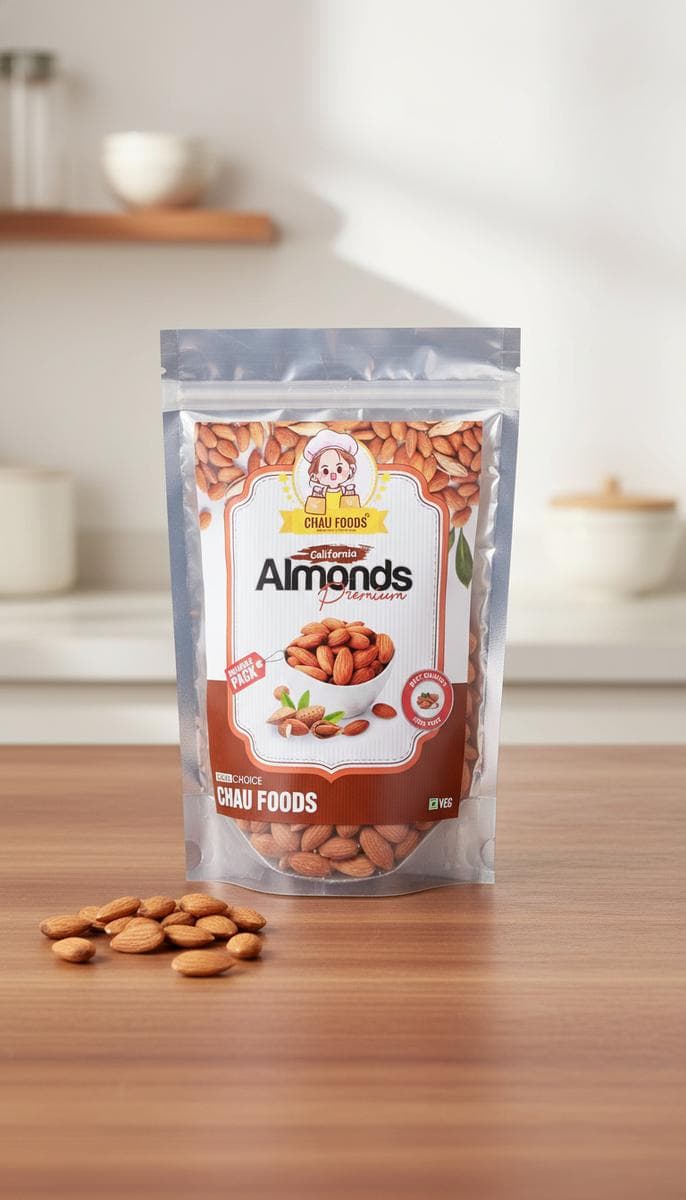
Premium California Almonds
Premium California almonds - 21g protein, Vitamin E rich, ideal for daily soaking & snacking
✓ FSSAI certified · Free delivery ₹399+
The question we get asked most on WhatsApp, so let's answer it upfront:
- Adults: 8-10 soaked almonds daily (about 10-12g) - enough for the heart, brain, and skin benefits without excess calories
- Children (4-12 years): 4-5 soaked and peeled almonds - soft, easy to chew, and gentle on small stomachs
- Pregnancy: 10-12 soaked almonds daily - the extra folate, calcium, and Vitamin E support both mother and baby
- Gym-goers / high activity: up to 15-20 almonds, ideally split between morning and pre-workout
Consistency beats quantity. 8 almonds every single day will do more for you than 30 almonds once a week. For the full breakdown by age, health condition, and season, read our detailed guide: How Many Almonds to Eat Per Day.
Almond Nutrition Facts (Per 100g)
Here is why nutritionists call badam a complete package. Values per 100g of raw almonds:
| Nutrient | Per 100g | Why It Matters |
|---|---|---|
| Energy | 579 kcal | Dense, sustained fuel - a little goes a long way |
| Protein | 21g | Among the highest of all nuts - great for vegetarians |
| Total Fat | 50g | Mostly heart-healthy monounsaturated fat |
| Fibre | 12.5g | Keeps you full, feeds good gut bacteria |
| Vitamin E | 26mg (173% DV) | Powerful antioxidant for skin and immunity |
| Magnesium | 270mg | Blood pressure, blood sugar, and muscle function |
| Calcium | 269mg | Bones and teeth - more than most dairy-free foods |
A practical note: a standard 10-almond daily portion is roughly 12g, which works out to about 70 kcal, 2.5g protein, and 3mg Vitamin E - an easy, guilt-free daily habit.
10 Science-Backed Health Benefits of Eating Almonds Daily
Heart Health - Lower Cholesterol Naturally
Almonds are rich in monounsaturated fatty acids (MUFA), the same heart-healthy fats found in olive oil. Studies published in the Journal of the American Heart Association show that eating 42g of almonds daily can reduce LDL (bad) cholesterol by up to 5.3%. The high magnesium content also helps regulate blood pressure.
Brain Power - Sharpen Memory & Focus
There's a reason Indian parents give soaked almonds to children every morning! Almonds contain riboflavin and L-carnitine - nutrients that boost brain activity and reduce cognitive decline. The Vitamin E in almonds also protects brain cells from oxidative stress.
Weight Loss - Stay Full, Eat Less
Despite being calorie-dense, almonds are incredibly satiating. A study in the European Journal of Clinical Nutrition found that people who ate almonds as a mid-morning snack consumed fewer calories at lunch and dinner. The combination of protein (21g per 100g), fiber (12g), and healthy fats keeps hunger at bay.
Blood Sugar Control - Ideal for Diabetics
Almonds have a low glycemic index (GI of 0) and are high in magnesium. Research shows that eating almonds with meals can reduce the glycemic impact by up to 30%, making them perfect for people managing type 2 diabetes.
Vitamin E Powerhouse - Anti-Aging Antioxidant
Just 28 grams (about 23 almonds) provides 37% of your daily Vitamin E needs. This powerful antioxidant protects cells from free radical damage, slows aging, and supports immune function.
Strong Bones & Teeth
Almonds are an excellent source of calcium (264mg per 100g), magnesium, and phosphorus - all essential minerals for maintaining strong bones and preventing osteoporosis, especially in women.
Glowing Skin & Healthy Hair
The Vitamin E and healthy fats in almonds nourish skin from within. Almond oil has been used in Ayurveda for centuries for hair growth, reducing dark circles, and achieving a natural skin glow.
Gut Health - Prebiotic Fiber
Almonds contain prebiotic fiber that feeds beneficial gut bacteria. A healthy gut microbiome is linked to better immunity, mood, and digestion.
Sustained Energy Without the Crash
With a perfect balance of protein, fiber, and healthy fats, almonds provide long-lasting energy - unlike sugary snacks that cause blood sugar spikes and crashes. Perfect for mid-morning or pre-workout snacking.
Immunity Boost
The combination of Vitamin E, zinc, and antioxidants in almonds strengthens your immune system. Regular consumption helps your body fight infections, especially during cold and flu season.
How to Eat Almonds for Maximum Benefits
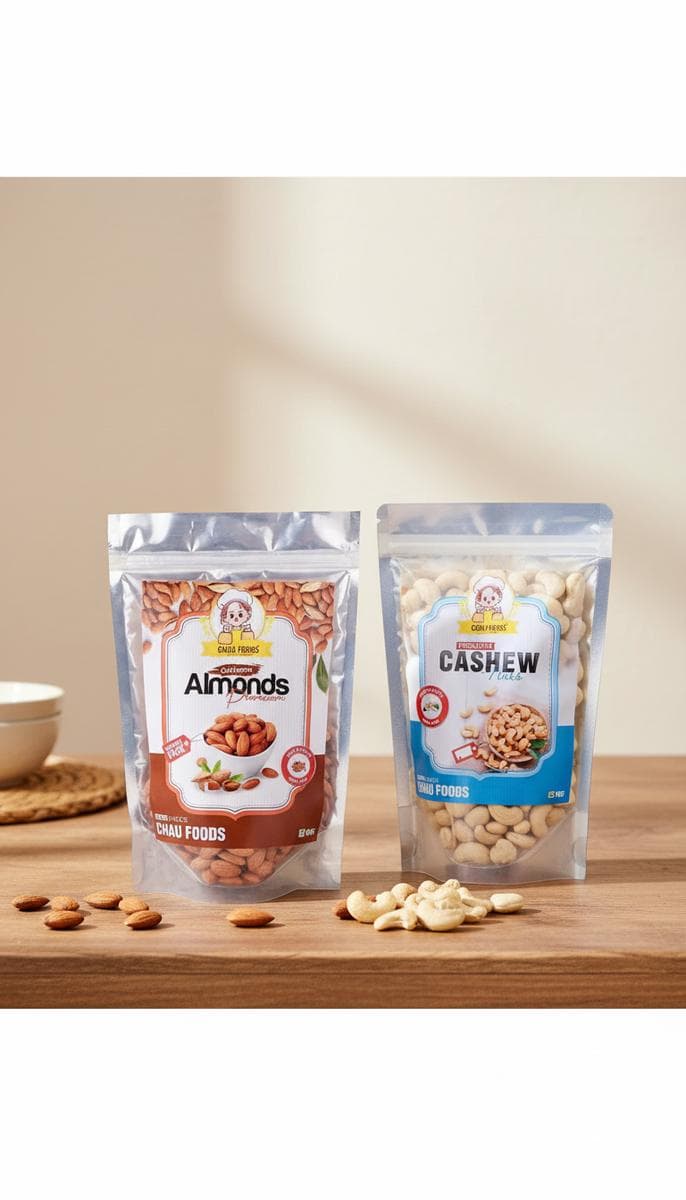
Featured Product
Combo Almond + Cashew
Almond + cashew combo - 400g of India's favourite dry fruits, save more vs buying separately
✓ FSSAI certified · Free delivery ₹399+
- Soaked almonds (best method): Soak 7-10 almonds overnight in water. Peel and eat first thing in the morning on an empty stomach. Soaking removes phytic acid and makes nutrients more bioavailable.
- Raw snacking: Carry a small pouch of raw California almonds (15-20 a day) for a healthy office or travel snack.
- Almond milk: Blend soaked almonds with water and strain for a dairy-free, protein-rich milk alternative.
- Smoothie boost: Add 10 almonds to your morning smoothie for extra protein and creaminess.
- Almond flour: Use in rotis, pancakes, and baking for a gluten-free, low-carb alternative.
Best Time to Eat Almonds (Indian Routine)
Timing changes what almonds do for you:
- Early morning, empty stomach (best): Soaked, peeled almonds first thing in the morning give maximum nutrient absorption - this is the classic routine Indian households have followed for generations, and the science backs it.
- Mid-morning (11 AM): A small handful of raw almonds between breakfast and lunch keeps blood sugar steady and prevents the pre-lunch samosa temptation.
- Pre-workout (30-45 minutes before): The healthy fats and protein provide slow-release energy without weighing you down.
- Evening tea time (4-5 PM): Swap biscuits and namkeen for roasted almonds - you save 100+ empty calories and gain protein instead.
- With meals for diabetics: Eating almonds alongside rice or roti blunts the glycemic spike of the meal itself.
The one time to go easy: right after a heavy dinner, when the extra fat can feel heavy. Otherwise almonds fit almost any slot in an Indian day.
Easy Indian Ways to Add Almonds to Your Day
You do not need fancy recipes - almonds slot into what Indian kitchens already make:
- 1Badam milk (badam doodh): Grind 8-10 soaked almonds with warm milk, a pinch of cardamom, and haldi in winter. A protein-rich bedtime drink for children and elders alike.
- 2Breakfast topper: Slivered almonds over poha, upma, daliya, or curd take 10 seconds and add crunch plus 3-4g protein.
- 3Badam chikki or ladoo: Made with jaggery instead of refined sugar, these are festival-worthy and far better than store-bought mithai.
- 4Trail mix dabba: Almonds + roasted makhana + pumpkin seeds + a few raisins in a small dabba - the office snack that survives the 4 PM slump.
- 5Grated into gravies: Ground almonds thicken shahi and korma-style gravies naturally - richer taste, no cream needed.
A quick storage note for Indian weather: almonds' healthy fats can turn rancid in Delhi summers and humid monsoons. Keep them in an airtight steel or glass container away from sunlight - in the fridge from April to September - and they stay fresh for 6+ months. Never store them near strong-smelling masalas; almonds absorb odours quickly. Our vacuum-sealed packs are designed exactly for this climate.
Soaked Almonds vs Raw Almonds - Which Is Better?
Your dadi was right about this one. Soaked almonds are easier to digest and have measurably higher nutrient absorption. Soaking for 8-12 hours:
- Removes phytic acid - the natural "anti-nutrient" in the almond skin that binds to zinc, iron, and calcium and blocks their absorption. Soaking breaks it down, improving mineral absorption by an estimated 20-30%
- Releases enzymes (like lipase) that aid fat digestion
- Makes proteins more bioavailable
- Softens the texture for children and the elderly
- Makes the skin easy to peel - and most of the phytic acid sits in that brown skin
Raw almonds are still highly nutritious and far more convenient for on-the-go snacking - the fibre, protein, and Vitamin E are all intact either way. The practical routine most of our customers follow: soak 8-10 almonds at night for the morning, and keep a pouch of raw almonds in your office bag for the 4 PM hunger window.
Both forms are excellent - the best almond is the one you eat consistently. For the complete science (including what Ayurveda says), read our full comparison: Soaked Almonds vs Raw Almonds.
California vs Mamra vs Gurbandi Almonds - Which Should You Buy?
Walk into any Delhi dry fruit market and you'll hear three names. Here's the honest breakdown for Indian buyers:
California almonds are the flat, uniform, mildly sweet almonds that make up over 80% of what India consumes. They're grown at scale in the USA, which keeps prices sensible (our California Almonds are ₹290 for 200g), and their quality is consistent batch after batch. For daily soaking and family snacking, they offer the best nutrition-per-rupee - the 21g protein and 26mg Vitamin E per 100g figures above are California almond values.
Mamra almonds (from Iran and Afghanistan) are small, curved, and visibly oily. They contain 8-10% more healthy fats and carry a richer, sweeter taste - but genuine Mamra costs 3-4x more than California (₹1,200-2,000/kg), and an estimated half of the "Mamra" sold loose in Indian markets is ordinary almonds polished with oil. Buy Mamra only from a source that shows origin certification.
Gurbandi almonds (Afghanistan) are the middle path - smaller than California, higher oil content like Mamra, but at roughly half Mamra's price. Traditionally preferred in Ayurveda for brain health and often recommended during pregnancy.
Our honest advice: for 90% of households, premium California almonds are the smart daily choice. Upgrade to Gurbandi or Mamra for pregnancy, growing children, or if the richer taste matters to you - not because a shopkeeper says "asli badam."
Almonds vs Walnuts vs Cashews - Nut Comparison
All three belong in an Indian kitchen, but they do different jobs. Per 100g:
| Nutrient | Almonds | Walnuts | Cashews |
|---|---|---|---|
| Calories | 579 kcal | 654 kcal | 553 kcal |
| Protein | 21g | 15g | 18g |
| Vitamin E | 26mg | 0.7mg | 0.9mg |
| Omega-3 (ALA) | Trace | 9g | Trace |
| Fibre | 12.5g | 6.7g | 3.3g |
| Best for | Skin, satiety, protein, diabetes | Brain & heart (omega-3) | Energy, minerals, taste |
The takeaway: almonds win on protein, fibre, and Vitamin E; walnuts are unbeatable for omega-3; cashews are the tastiest source of magnesium and iron but the easiest to overeat. A mixed handful - 5 almonds, 1 walnut, 3 cashews - covers all bases. See our full face-off: Makhana vs Almonds vs Cashews.
Who Should Be Careful With Almonds?
Almonds are safe for almost everyone, but a few groups should watch their intake:
- Kidney stone patients: Almonds are high in oxalates, which can contribute to calcium-oxalate stones (the most common type in India). If you've had kidney stones, limit almonds to 4-5 a day and drink plenty of water - or ask your doctor first.
- Nut allergies: Tree nut allergy is serious and almonds are a common trigger. Symptoms range from itching and hives to swelling and breathing difficulty. If you or your child has any known nut allergy, avoid almonds entirely and read labels - almond flour and almond milk count too.
- People on blood-thinner medication: Very high Vitamin E intake can have a mild blood-thinning effect. Normal food quantities (8-10 almonds) are fine, but if you take warfarin or similar anticoagulants, avoid Vitamin E supplements on top of heavy nut consumption, and mention your diet to your doctor.
- Digestive issues: The high fibre can cause bloating if you jump from zero to 20 almonds overnight. Start with 4-5 soaked almonds and build up gradually.
Why Buy Almonds from Chau Foods?
- 100% Premium California Almonds - no mixing, no adulteration
- FSSAI Certified - food safety guaranteed
- Farm-fresh with zero preservatives - pure natural goodness
- Bulk pricing available - save more when you buy 1kg or more
- Free delivery across India on orders above ₹399
Shop our premium California almonds or pick the popular Almond + Cashew combo pack at chaufoods.com - India's trusted online dry fruits store.
Frequently Asked Questions
How many almonds should I eat per day?+
Is it better to eat almonds soaked or raw?+
Do almonds cause weight gain?+
Can diabetics eat almonds daily?+
Which almond is best - California, Mamra, or Gurbandi?+
Should almonds be eaten with or without the skin?+
Can I eat almonds at night?+
Editorial Note
How we publish Chau Foods blog guides
This article is published by the Chau Foods editorial team for general food education, ingredient guidance, and shopping support. It is not a substitute for medical advice, diagnosis, or treatment.
Reader Checklist
- Published on 1 August 2026
- Last reviewed and updated on 1 August 2026 by the Chau Foods editorial team.
- Use this guide for food education and buying decisions, not medical treatment.
- If you have allergies or a clinical diet plan, check with a qualified professional first.
About the Author
Chau Foods Editorial Team
This guide is written and fact-checked by the Chau Foods editorial team - a small group of FSSAI-certified food specialists based in Rohini, Delhi. Led by founder Mohit, the team combines direct farm-sourcing experience (California almonds, Bihar makhana from Darbhanga & Madhubani, Kashmir walnuts, Kerala spices) with hands-on quality control at the Chau Foods packing facility. We publish only what we would feed our own families, cite Indian nutrition data where relevant, and refresh every article when sourcing, pricing, or health guidelines change.
- Credentials
- FSSAI Lic. 13321008000704
- Based in
- Rohini, Delhi · since 2020
- Rating
- 4.9/5 · 27+ Google reviews
Keep Exploring
Shop related collections and next steps
Use this guide to compare options, then move directly into the most relevant collection, brand story, or bulk-order path.
Almond Collection
Browse daily-use almonds, premium badam picks, and related dry fruit options.
Shop the collectionWhy Chau Foods
Learn more about our sourcing, freshness standards, and the quality promises behind each product we ship.
Read our storyBulk & gifting help
Need larger quantities, office snacks, festive gifting, or repeat ordering support? Start with our bulk orders page.
Start a bulk enquiry