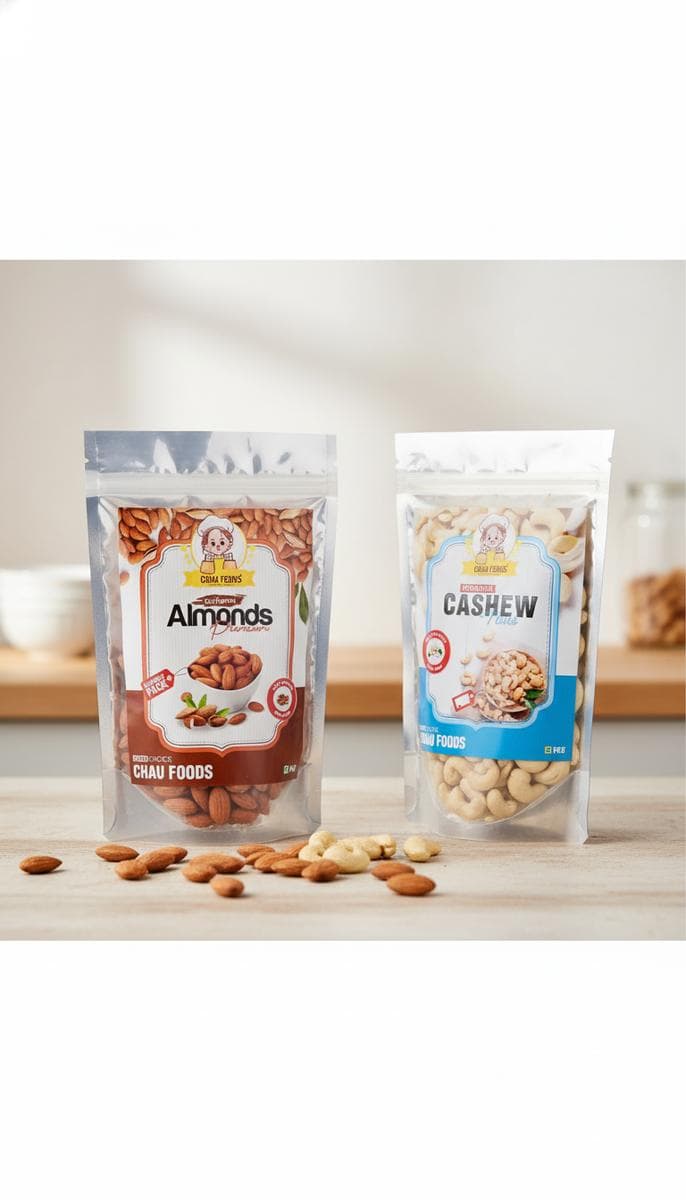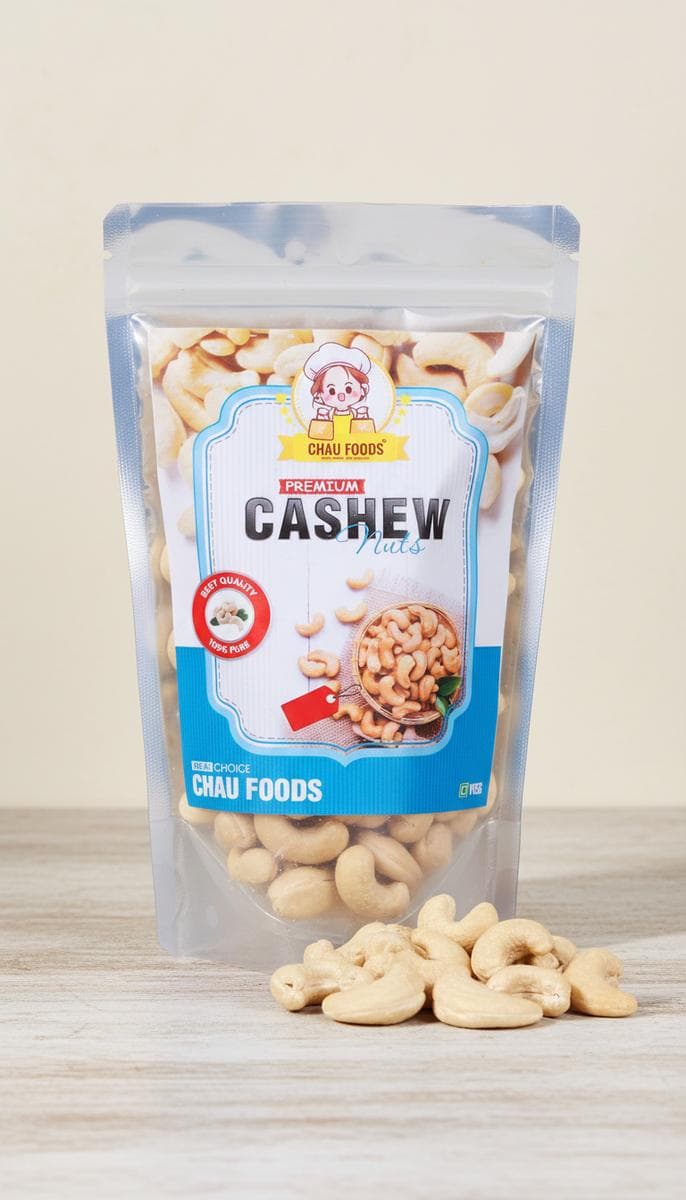
Vietnam and India are the two largest cashew exporters in the world, controlling over 80% of global cashew trade. Yet the two countries source, process, and export cashews differently - with significant implications for importers and retailers.
This guide compares both origins objectively, so you can decide which is the better fit for your business, budget, and target market.
1. Global Cashew Market Overview: Vietnam vs India
Vietnam's role in global cashew export:
- Processes approximately 60% of the world's cashew nuts
- However, Vietnam produces almost no cashews domestically
- Imports raw cashew nuts from Africa (Guinea-Bissau, Ivory Coast, Benin, Tanzania) and processes them
- Re-exports processed cashew kernels globally
- Major processing clusters in Ho Chi Minh City, Dong Nai, and Binh Duong provinces
India's role in global cashew export:
- Produces and processes domestically - does not rely on imports for raw material
- Accounts for approximately 25-30% of global cashew exports (and growing)
- Processing centers in Goa, Kerala, Karnataka, Maharashtra
- Sources raw cashews from domestic orchards and some imports from East Africa
- Known for premium grades and quality control in specific regions (especially Goa)
Why this matters for importers: Vietnam's model means they have massive scale and competitive pricing due to volume economies. India's model means traceability, domestic sourcing transparency, and quality control over the entire supply chain.
2. Cashew Grading System - Identical Globally
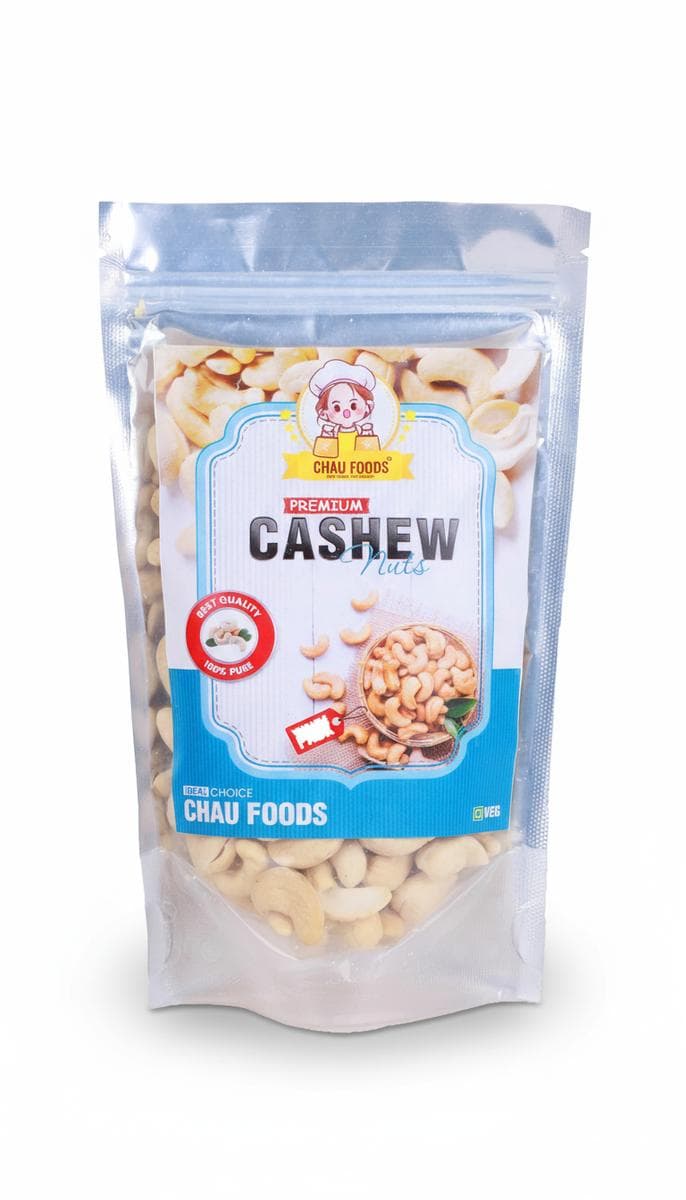
Featured Product
Premium W240 Cashews 🇮🇳
W240 jumbo-grade whole cashews - 18g protein, creamy, crunchy & unbroken, perfect for snacking & cooking
✓ FSSAI certified · Free delivery ₹399+
Both India and Vietnam use the same international cashew grading standard, defined by the International Nut and Dried Fruit Council (INC). This makes direct comparison fair.
Standard cashew grades:
| Grade | Pieces per 100g | Typical Use | Characteristics |
|---|---|---|---|
| W180 | ~18-20 | Premium whole | Largest kernels, lightest colour, sweetest taste |
| W210 | ~21-25 | Premium whole, retail | High quality, uniform, sweet |
| W240 | ~24-26 | Standard whole, food service | Good size, consistent, mild taste |
| W320 | ~32-34 | Most traded grade | Smaller than W240, economical, common in bakery/snacking |
| W450 | ~45-50 | Economy grade | Small kernels, suitable for food manufacturing |
| Splits & Pieces | Varies | Industrial, snacks, candy | Broken kernels, lower price, same flavour |
Both countries produce all grades. The difference comes in consistency and quality control - not the grading standard itself.
3. Taste, Texture, and Quality Differences
Here is where Indian and Vietnamese cashews diverge noticeably:
Indian Cashews (especially from Goa)
- Taste: Sweeter, more delicate nutty flavour
- Texture: Slightly buttery, tender
- Colour: Pale ivory to light tan (sign of careful processing)
- Consistency: More variation between individual cashews, but premium batches are exceptional
- Best for: High-end retail, premium snacking, customers who value flavour
Vietnamese Cashews
- Taste: Mild, neutral, less distinctive flavour
- Texture: Slightly firmer, more consistent snap
- Colour: Uniform pale colour, very consistent appearance
- Consistency: Remarkable uniformity in size, colour, and texture across batches
- Best for: Food manufacturing, snack blending, bulk export, customers prioritizing consistency
Why the difference? India's smaller processing scale allows more artisanal processing and care in roasting. Vietnam's massive industrial scale optimizes for uniformity and volume, not nuance. Both approaches are valid - it depends on what your customer values.
4. Pricing Comparison - Vietnam's Volume Advantage
Vietnam's advantage is pricing due to scale.
April 2026 approximate FOB prices (per metric tonne):
| Grade | Indian Cashew | Vietnamese Cashew | Difference |
|---|---|---|---|
| W180 | $3,200-3,600 | $2,800-3,200 | Vietnam 10-15% cheaper |
| W210 | $2,800-3,200 | $2,400-2,800 | Vietnam 12-18% cheaper |
| W240 | $2,400-2,800 | $2,000-2,400 | Vietnam 15-20% cheaper |
| W320 | $2,200-2,600 | $1,800-2,200 | Vietnam 18-25% cheaper |
| W450 | $1,600-2,000 | $1,400-1,800 | Vietnam 12-20% cheaper |
Variables affecting price:
- Currency fluctuation (Indian Rupee vs Vietnamese Dong vs USD)
- Harvest quality (crop quality varies year to year)
- Shipping costs from source ports
- Demand from major importers (USA, EU, Middle East)
- Stock levels at export time
For budget-conscious importers: Vietnamese cashews offer consistent, reliable value. For premium positioning: Indian (especially Goan) cashews command higher retail prices and justify better margins.
5. Certifications and Food Safety Standards
Both countries meet international food safety requirements, but through different regulatory frameworks.
Indian Certifications
- FSSAI (Food Safety and Standards Authority of India): Mandatory licence for all food processing
- APEDA (Agricultural Processed Food Products Export Development Authority): Mandatory for agricultural exports
- ISO 22000: Food Safety Management System (many exporters hold this)
- USA FDA FSMA Compliance: For exports to the USA
- EU MRL Compliance: Maximum residue limits for pesticide residues
Vietnamese Certifications
- VinaControl: Vietnam's primary food safety certification body
- ISO 22000: Similar to India
- USA FDA: Required for US imports
- EU EFSA: For European exports
- GLOBALG.A.P.: Some exporters hold this agricultural standard
In practice: Both India and Vietnam are approved suppliers to the USA, EU, and Middle East. Both must comply with the strictest international food safety standards. The regulatory framework is different, but the outcome is equivalent - both origins export safe, compliant products.
For importers: Ask for lab test reports from an accredited lab (SGS, TUV Rheinland, or AAFCO for USA imports) regardless of origin. The certification name matters less than the actual test results.
6. Minimum Order Quantities (MOQ)
Both origins have different MOQ expectations:
Vietnam:
- Typical MOQ: 1-2 containers (20 MT per container)
- Some exporters accept 5-10 MT orders (smaller shipments)
- Very large-scale exporters may not negotiate below 1 container
- Advantage: Willing to work with smaller importers
India:
- Typical MOQ: 1-2 containers (25 MT per container)
- Some exporters accept 5-10 MT orders
- Smaller exporters may accept 2-5 MT
- Advantage: More flexible for small-to-medium importers
Practical reality: If you need less than 5 MT, India and Vietnam are roughly comparable on MOQ flexibility. If you need 20+ MT at regular intervals, Vietnam's larger exporters can offer better consistency and pricing.
7. Shipping Routes and Logistics
Where cashews are processed determines the shipping timeline and cost to your destination.
From India (Goa, Kerala, Cochin Port)
- To USA East Coast: 20-24 days via Suez Canal
- To USA West Coast: 28-32 days via Suez Canal
- To UK/Germany: 18-22 days
- To UAE/Middle East: 8-10 days
- To Singapore/Australia: 14-18 days
- Freight cost example (to USA): $2,000-3,500 per 20 MT container
From Vietnam (Ho Chi Minh City Port, Cai Mep Port)
- To USA East Coast: 18-20 days via Suez Canal
- To USA West Coast: 26-28 days via Suez Canal
- To UK/Germany: 20-24 days
- To UAE/Middle East: 10-12 days
- To Singapore/Australia: 8-12 days
- Freight cost example (to USA): $2,000-3,200 per 20 MT container
Difference: Vietnam has slightly faster transit to East Asian destinations. India is competitive on all other routes. Both are 2-4 weeks away from major Western markets.
8. Which Origin Fits Your Business Model?
Choose **Indian Cashews** if:
- You want to emphasize premium quality and origin in marketing
- Your customers value distinct taste and flavour
- You are selling to specialty retailers, organic markets, or premium segments
- You need smaller MOQs (some Indian exporters are flexible)
- You want to support domestic Indian agriculture (marketing angle)
- You want more supplier relationship flexibility (India has more mid-size exporters)
Choose **Vietnamese Cashews** if:
- You need competitive pricing and tight margins
- You prioritize consistency and uniformity (large-scale food manufacturing, blending)
- You need bulk volumes (20+ MT regularly)
- You are selling mass-market snacking or food ingredients
- You value large-scale logistics capacity
- You want price stability (Vietnamese exporters have more competitive pressure, reducing price volatility)
Dual-Sourcing Strategy
Many large importers source from both simultaneously:
- Vietnam for volume, consistency, and cost
- India for premium products and higher margins
- Sell to different customer segments (budget vs premium)
- Reduce supply chain risk (one country's export restrictions won't shut you down)
9. Export Documentation and Timeline
Both countries can provide complete documentation, but timing varies.
Indian exporters typically:
- Provide commercial invoice within 24 hours of order confirmation
- Arrange phytosanitary certificate within 3-5 days
- Arrange B/L within 7-10 days of container loading
- Full documentation package within 10-12 days
Vietnamese exporters typically:
- Provide commercial invoice within 12-24 hours
- Arrange phytosanitary certificate within 2-3 days
- Arrange B/L within 5-7 days
- Full documentation package within 7-10 days
Vietnam has a slight edge on speed due to processing at higher volume and routine export procedures. But both are professionally competent.
10. Quality Control and Supply Chain Transparency
India
- Advantage: You can trace cashews to specific orchards or regions
- Smaller exporters allow facility visits and transparency
- Quality can be verified at farmer/harvest level
- Higher variation because sourcing is more decentralized
Vietnam
- Advantage: Massive facilities with strict quality control systems
- Consistency is engineered into the process
- Less transparency into the raw material source (sourced internationally)
- Quality is highly predictable batch to batch
For importers: If you care about sourcing transparency and origin, India wins. If you care about predictability and consistency, Vietnam wins. Both are legitimate export origins with different value propositions.
11. Why Consider Indian Cashews from Chau Foods
If you are evaluating Indian cashews specifically, here is what sets Chau Foods apart:
- Sourcing: Goa-sourced premium cashews, known for superior taste and texture
- Grade Range: W180 to W450 - all grades available, consistent quality
- Certifications: FSSAI licence active, APEDA registered exporter, IEC: CSWPM1284L
- Pricing: Competitive FOB pricing, transparent and consistent
- Samples: Free samples to qualified importers within 24-48 hours
- Documentation: Complete export documentation without delays - commercial invoice, phytosanitary cert, B/L, APEDA certificate, lab reports
- MOQ: Flexible on MOQ - we work with importers ordering 5 MT to 100+ MT
- Track Record: 8+ years exporting to USA, Canada, UK, Germany, UAE, Singapore, Australia
When you choose Chau Foods, you are not compromising on India's quality and transparency to get Vietnam's efficiency - we combine both.
Cost Breakdown: Hidden Costs Beyond FOB Price - What Importers Forget
When comparing pricing between Indian and Vietnamese cashew exporters, most buyers focus only on the FOB (Free on Board) price per kilogram. This is a critical mistake. The final landed cost - what you actually pay to get cashews in your warehouse - includes numerous components that many first-time importers overlook.
Ocean freight (15-25% of FOB price for sea freight):
If importing 20 MT from India to Europe, expect ocean freight of $8,000-12,000 depending on the route, season, and shipping line. Vietnamese shipments may be $1,000-2,000 cheaper due to Ho Chi Minh City being a hub port with higher vessel frequency.
Insurance (1-3% of shipment value):
International cashew shipments must be insured against loss or damage during transit. For a $50,000 shipment, insurance costs $500-1,500. Many importers skip this and regret it when damage occurs.
Fumigation and phytosanitary treatment (2-5% of shipment cost):
Most importing countries require cashew containers to be fumigated and treated to prevent pest entry. This costs $500-1,500 per container, depending on your destination port's regulations. Vietnam sometimes has lower fumigation costs due to higher volume and established relationships with fumigation service providers.
Re-inspection at destination port (1-2% of shipment cost):
Many importers hire independent labs at the destination port (SGS, Intertek, Bureau Veritas) to verify quality matches the pre-shipment sample. This costs $300-800 per shipment. This is non-negotiable if importing to regulated markets like the USA or EU.
Customs duty and tariffs (5-12% in most developed countries):
The USA applies 0% tariffs on Indian almonds but 5% on cashews. The EU applies 0-2% depending on the product category. Middle Eastern countries may charge 5-15%. These are significant but often calculated incorrectly by importers.
Port handling and terminal charges (2-4% of shipment cost):
When your container arrives at the destination port, terminal fees apply for unloading, storage (if delays occur), and handling. These range from $200-1,000 per container depending on port congestion.
Customs brokerage and documentation ($500-2,000 per shipment):
Unless you are an experienced importer, you will hire a customs broker to handle documentation, duty payments, and customs clearance. Brokers typically charge flat fees ($500-2,000) or a percentage (0.5-1.5% of shipment value).
Total landed cost impact: A $50,000 FOB shipment from India could cost an additional $12,500-20,000 (25-40%) by the time it reaches your warehouse. Vietnamese shipments might save 10-15% on logistics, which is meaningful but not always decisive when quality and relationships matter more.
The lesson: Always request CIF (Cost, Insurance & Freight) quotes from exporters, which include freight and insurance upfront. This allows you to compare true landed costs. Do not fall into the trap of optimizing only the FOB price.
Cashew Quality Grading: W-Grade Explained - Size, Price, and Best Uses
Cashew quality is standardized globally using the "W-grade" system, which refers to the number of whole cashew kernels per pound (454 grams). Understanding these grades is essential because they determine pricing, market positioning, and end-use.
W180 (Premium whole, largest kernels):
- Number of kernels per pound: ~180 (about 2.5 grams per kernel)
- Appearance: Large, uniform, unblemished, whole kernels
- Price tier: ₹650-800/kg FOB from India; ₹600-750/kg FOB from Vietnam
- Best for: Premium retail, gifting, hotels, raw snacking, high-end gift boxes
- Market: Affluent consumers, specialty stores, premium online retailers
- Notes: The largest and rarest grade; fetches highest retail prices ($18-25/kg retail in USA). Even minor breakage disqualifies kernels from this grade.
W240 (Large whole kernels):
- Number of kernels per pound: ~240 (about 1.9 grams per kernel)
- Appearance: Large, mostly whole, minor cosmetic blemishes acceptable
- Price tier: ₹500-600/kg FOB from India; ₹450-550/kg FOB from Vietnam
- Best for: Retail retail, healthy snacking brands, food service, bakeries
- Market: Mid-market consumers, health food stores, casual gifting
- Notes: The most commonly traded grade globally; offers best balance of quality, price, and availability. Most restaurant-grade cashew products use W240.
W320 (Medium whole kernels):
- Number of kernels per pound: ~320 (about 1.4 grams per kernel)
- Appearance: Medium-sized, whole, some breakage allowed
- Price tier: ₹350-450/kg FOB from India; ₹300-400/kg FOB from Vietnam
- Best for: Bulk food manufacturers, snacking blends, processed foods
- Market: Budget-conscious consumers, bulk ordering, industrial food production
- Best uses: Cashew butter, trail mixes, granola, energy bars, culinary blending
- Notes: Still acceptable for retail but less visually impressive than W180/W240. Ideal for value-conscious importers.
W450 (Small whole kernels):
- Number of kernels per pound: ~450 (about 1 gram per kernel)
- Appearance: Small, mostly whole, higher tolerance for breakage (up to 5%)
- Price tier: ₹250-350/kg FOB from India; ₹200-300/kg FOB from Vietnam
- Best for: Candy-coating, chocolate-covered cashews, candy production, bulk snacking
- Market: Food manufacturers, confectionery companies
- Notes: Smallest whole kernel grade. Often used in processed products where size matters less.
Broken grades (S, LWP, SWP):
- S (Shell): Pieces ranging from half-kernels to small fragments
- LWP (Large White Pieces): Fragments larger than 50% of a kernel
- SWP (Small White Pieces): Fragments smaller than 50% of a kernel
- Price tier: ₹150-250/kg FOB (significantly cheaper than whole grades)
- Best for: Cashew paste, nut butters, ground cashew products, animal feed
- Market: Manufacturers of cashew paste, spreads, culinary ingredients
- Notes: The price difference from W450 to broken grades can be 30-50%, making them attractive for cost-conscious processors. However, broke grades do not retail well as whole cashew products.
Pricing pattern: There is approximately a 30-40% price difference between W180 and broken grades. An importer choosing between W180 and W320 saves about 25-30% by going down one grade but loses visual appeal and premium positioning. This is why understanding your target market is critical.
Pro tip for importers: Do not assume that "higher grade equals better." W320 offers exceptional value for most use cases. W180 is only essential if you are targeting affluent consumers who specifically want large, impressive kernels. For snacking blends, food service, and bulk retail, W240 is the sweet spot - premium enough to command reasonable retail prices, affordable enough to maintain healthy margins. When you source from Chau Foods, we help you select the optimal grade for your specific market and margin targets - request free samples of W180, W240, W320, and W450 to compare directly.
---
About the Author
Chau Foods Editorial Team
This guide is written and fact-checked by the Chau Foods editorial team - a small group of FSSAI-certified food specialists based in Rohini, Delhi. Led by founder Mohit, the team combines direct farm-sourcing experience (California almonds, Bihar makhana from Darbhanga & Madhubani, Kashmir walnuts, Kerala spices) with hands-on quality control at the Chau Foods packing facility. We publish only what we would feed our own families, cite Indian nutrition data where relevant, and refresh every article when sourcing, pricing, or health guidelines change.
- Credentials
- FSSAI Lic. 13321008000704
- Based in
- Rohini, Delhi · since 2020
- Rating
- 4.9/5 · 27+ Google reviews
Keep Exploring
Shop related collections and next steps
Use this guide to compare options, then move directly into the most relevant collection, brand story, or bulk-order path.
Cashew Collection
Explore premium cashews for snacking, gifting, and home cooking.
Shop the collectionWhy Chau Foods
Learn more about our sourcing, freshness standards, and the quality promises behind each product we ship.
Read our storyBulk & gifting help
Need larger quantities, office snacks, festive gifting, or repeat ordering support? Start with our bulk orders page.
Start a bulk enquiry